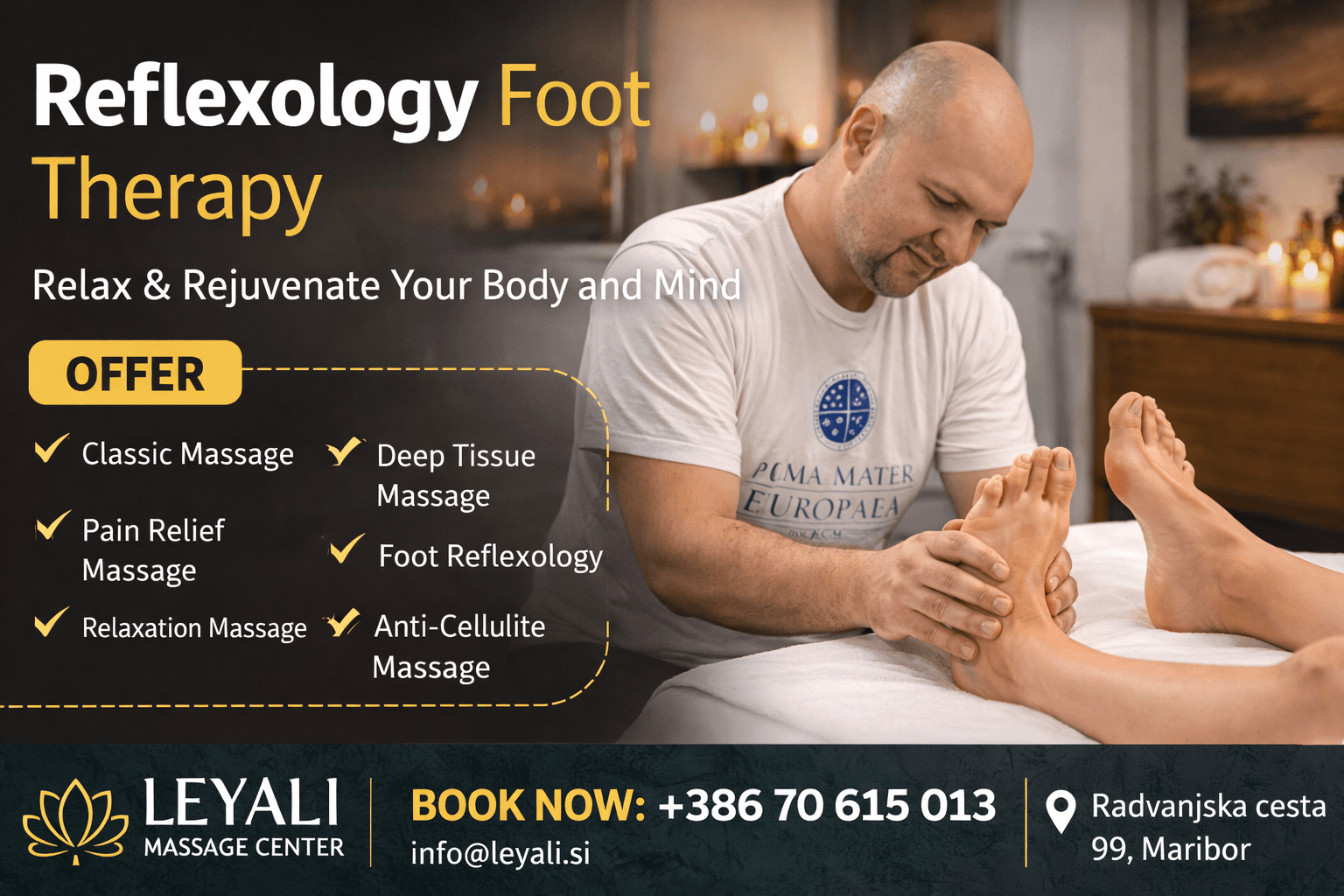
Reflexology foot therapy is not a trend, a spa gimmick, or a relaxation shortcut. It is a structured therapeutic practice rooted in anatomy, neurology, and centuries of observation. People seek reflexology foot therapy when pain medication fails, when stress becomes chronic, when sleep is disrupted, or when the body sends signals that something is out of balance.
This page is written as real page content, not promotional filler. It reflects hands-on therapeutic experience, clinical understanding, and ethical practice followed at LEYALI, where reflexology foot therapy is delivered as a serious wellness discipline, not surface-level massage.
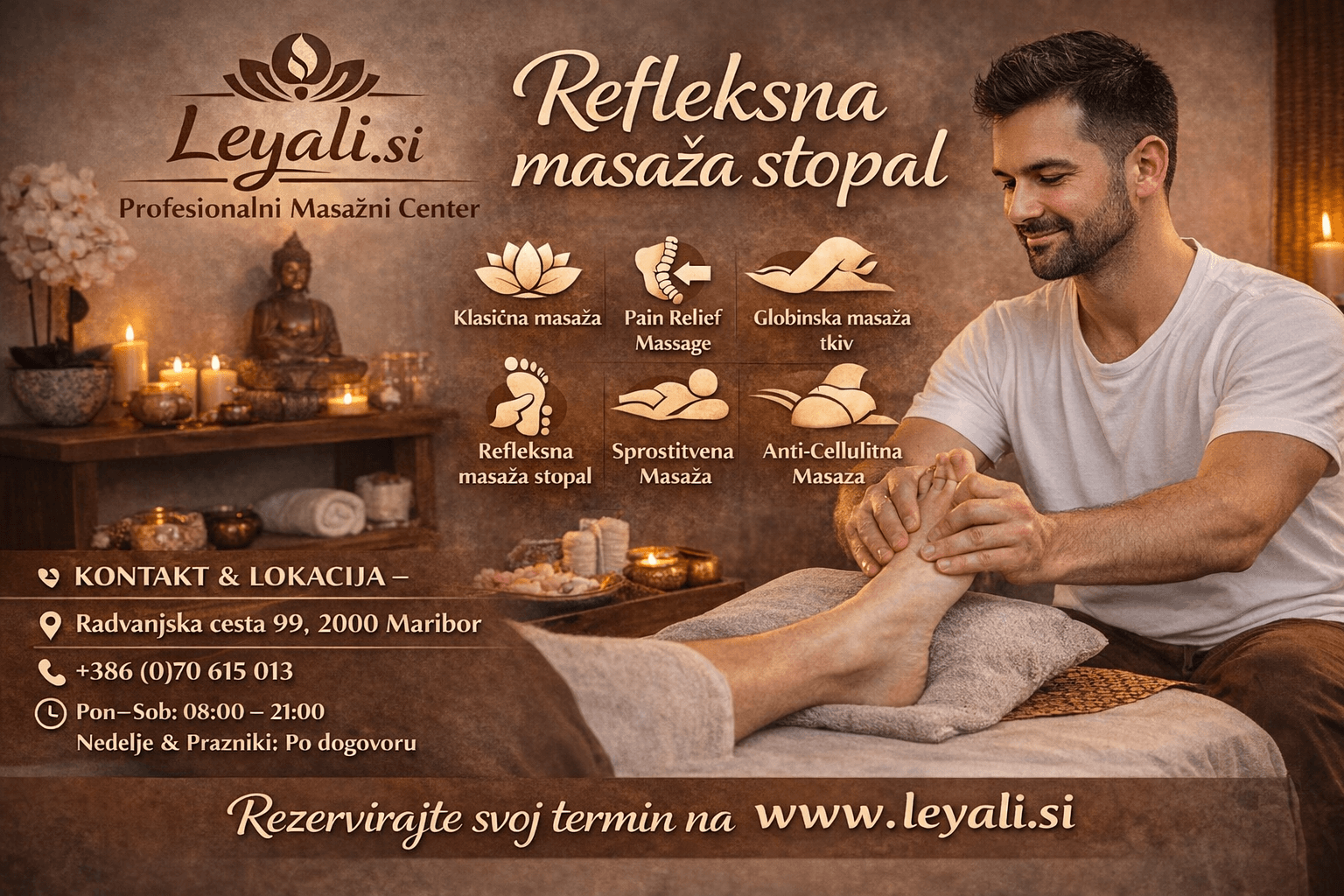
Location & Contact Information
Address: Radvanjska Cesta 99, 2000 Maribor, Slovenia
Phone: +386 (0)70 615 013
What Reflexology Foot Therapy Really Is
Reflexology foot therapy is a manual therapeutic technique based on the principle that specific areas of the feet correspond to organs, glands, muscles, and systems within the body. By applying precise pressure to these reflex points, the therapist stimulates the nervous system, encourages circulation, and supports the body’s natural self-regulating mechanisms.
Reflexology foot therapy is not:
- Random foot massage
- Painful pressure without structure
- Religious or mystical practice
- Replacement for medical treatment
At LEYALI, reflexology foot therapy is practiced with anatomical awareness, client assessment, and clear therapeutic intent.
How Reflexology Foot Therapy Works on the Body
The feet contain thousands of nerve endings. These nerves connect to the spinal cord and brain, forming communication pathways throughout the body.
Reflexology foot therapy works by:
- Stimulating peripheral nerves
- Sending signals through the central nervous system
- Encouraging blood and lymphatic flow
- Reducing stress-related nervous tension
The result is not forced healing but supported regulation.
The Reflex Zones of the Feet Explained
Each foot is divided into longitudinal and transverse zones that mirror the body’s structure.
Major Reflex Areas Include
- Head and brain (toes)
- Spine (inner foot edge)
- Digestive organs (arch)
- Lungs and heart (upper arch)
- Kidneys and bladder (lower arch)
Professional reflexology foot therapy requires precise mapping, not guesswork.
Reflexology Foot Therapy vs Foot Massage
| Foot MassageReflexology Foot Therapy | |
| Focuses on muscles | Focuses on reflex points |
| Relaxation-based | Therapeutic intent |
| General pressure | Specific pressure patterns |
| Temporary comfort | Systemic response |
At LEYALI, reflexology foot therapy follows clinical logic rather than spa routines.
Conditions Commonly Supported by Reflexology Foot Therapy
Reflexology foot therapy is commonly used as a supportive therapy for:
- Chronic stress and anxiety
- Sleep disturbances
- Digestive discomfort
- Hormonal imbalance symptoms
- Headaches and migraines
- Circulation issues
- Muscular tension
- Nervous system fatigue
It does not diagnose or cure disease, but it supports balance and recovery.
Reflexology Foot Therapy and Stress Regulation
Stress affects every system in the body. Chronic stress keeps the nervous system in a constant “fight or flight” state.
Reflexology foot therapy:
- Activates parasympathetic response
- Lowers cortisol influence
- Encourages deep relaxation
- Improves sleep patterns
Clients at LEYALI often report calmness after the first session.
The Role of the Nervous System in Reflexology
The nervous system is the communication highway of the body. Reflexology foot therapy works primarily through this system.
Benefits include:
- Reduced nerve overstimulation
- Improved sensory processing
- Enhanced body awareness
This is why reflexology foot therapy can feel deeply calming yet energizing.
Digestive Health and Reflexology Foot Therapy
Digestive discomfort is often stress-related.
Reflexology foot therapy supports digestion by:
- Stimulating intestinal reflex points
- Reducing stress-related gut tension
- Supporting peristalsis
Many clients experience relief from bloating or irregular digestion.
Reflexology Foot Therapy for Circulation
Proper circulation is essential for tissue health.
Reflexology foot therapy:
- Encourages blood flow
- Supports lymphatic drainage
- Reduces stagnation
This is particularly beneficial for people with sedentary lifestyles.
Hormonal Balance and Reflexology Foot Therapy
Hormonal imbalance often presents as fatigue, mood changes, or sleep disruption.
Reflexology foot therapy may support:
- Endocrine system regulation
- Stress-related hormonal imbalance
- Menstrual discomfort support
At LEYALI, sessions are adapted based on individual symptoms.
Reflexology Foot Therapy for Sleep Issues
Poor sleep is one of the most common complaints.
Reflexology foot therapy supports sleep by:
- Calming the nervous system
- Reducing mental overstimulation
- Encouraging natural sleep cycles
Many clients report deeper sleep after regular sessions.
What Happens During a Reflexology Foot Therapy Session
1. Client Consultation
Understanding symptoms, lifestyle, and stress factors.
2. Foot Assessment
Observing temperature, tension, and sensitivity.
3. Targeted Reflex Work
Applying controlled pressure to specific reflex points.
4. Integration Phase
Allowing the body to respond and settle.
Sessions at LEYALI are never rushed.
Does Reflexology Foot Therapy Hurt?
Pressure may feel intense in sensitive areas, but it should never be unbearable.
At LEYALI, pressure is always adjusted based on:
- Client tolerance
- Reflex sensitivity
- Therapeutic goal
Pain is not required for effectiveness.
Reflexology Foot Therapy and Energy Balance
While reflexology is grounded in physiology, it also acknowledges energetic flow.
Balanced energy often manifests as:
- Improved mood
- Better focus
- Physical ease
This balance is a byproduct of nervous system regulation.
Who Can Benefit from Reflexology Foot Therapy
Reflexology foot therapy is suitable for:
- Office workers
- Seniors
- Athletes
- Individuals under chronic stress
- People seeking non-invasive wellness support
Sessions at LEYALI are adapted for each client.
Who Should Avoid Reflexology Foot Therapy
Temporary contraindications include:
- Acute foot injuries
- Severe infections
- Recent surgery (doctor approval required)
A professional therapist will always assess safety first.
Frequency of Reflexology Foot Therapy Sessions
General recommendations:
- Acute stress: weekly sessions
- Maintenance: bi-weekly or monthly
- Chronic conditions: structured programs
Consistency matters more than intensity.
Reflexology Foot Therapy and Long-Term Wellness
Regular sessions support:
- Stress resilience
- Nervous system stability
- Improved body awareness
At LEYALI, reflexology foot therapy is part of long-term wellness planning.
Misconceptions About Reflexology Foot Therapy
Common myths:
- “It cures diseases”
- “More pain equals better results”
- “It’s only relaxation”
Professional reflexology is subtle, structured, and evidence-informed.
Pros & Cons of Reflexology Foot Therapy
| ProsCons | |
| Non-invasive therapy | Not a medical treatment |
| Supports stress reduction | Requires consistency |
| Improves relaxation | Results vary by individual |
| Enhances body awareness | Not instant for chronic issues |
| Minimal side effects | Needs trained therapist |
Why Clients Choose LEYALI
Clients trust LEYALI because:
- Sessions are individualized
- Therapists are trained and ethical
- No exaggerated claims are made
- Focus is on long-term balance
Reflexology foot therapy at LEYALI is practiced with integrity.
Reflexology Foot Therapy for Modern Lifestyles
Modern life overloads the nervous system. Reflexology offers a pause, a reset, and a reconnection with bodily signals.
This is why reflexology foot therapy is increasingly sought in Maribor and across Slovenia.
Reflexology Foot Therapy and Mind-Body Connection
The feet carry both physical and neurological information.
Working through the feet allows:
- Gentle access to the nervous system
- Deep relaxation without mental effort
This makes reflexology uniquely effective.
Frequently Asked Questions About Reflexology Foot Therapy
1. What is reflexology foot therapy?
A therapeutic practice using pressure on foot reflex points to support body systems.
2. Is reflexology foot therapy safe?
Yes, when performed by a trained professional.
3. How long is a session?
Typically 45–60 minutes.
4. Can reflexology help with stress?
Yes, stress reduction is one of its primary benefits.
5. Does reflexology replace medical care?
No, it complements medical treatment.
6. How soon will I feel results?
Some feel immediate relaxation; others notice gradual changes.
7. Is reflexology painful?
Pressure may be intense but should not be painful.
8. Can pregnant women receive reflexology?
Only with specialized prenatal training and approval.
9. How often should I book sessions?
Weekly or bi-weekly depending on goals.
10. Why choose LEYALI for reflexology foot therapy?
Because LEYALI provides structured, ethical, and experience-based reflexology foot therapy in Maribor.