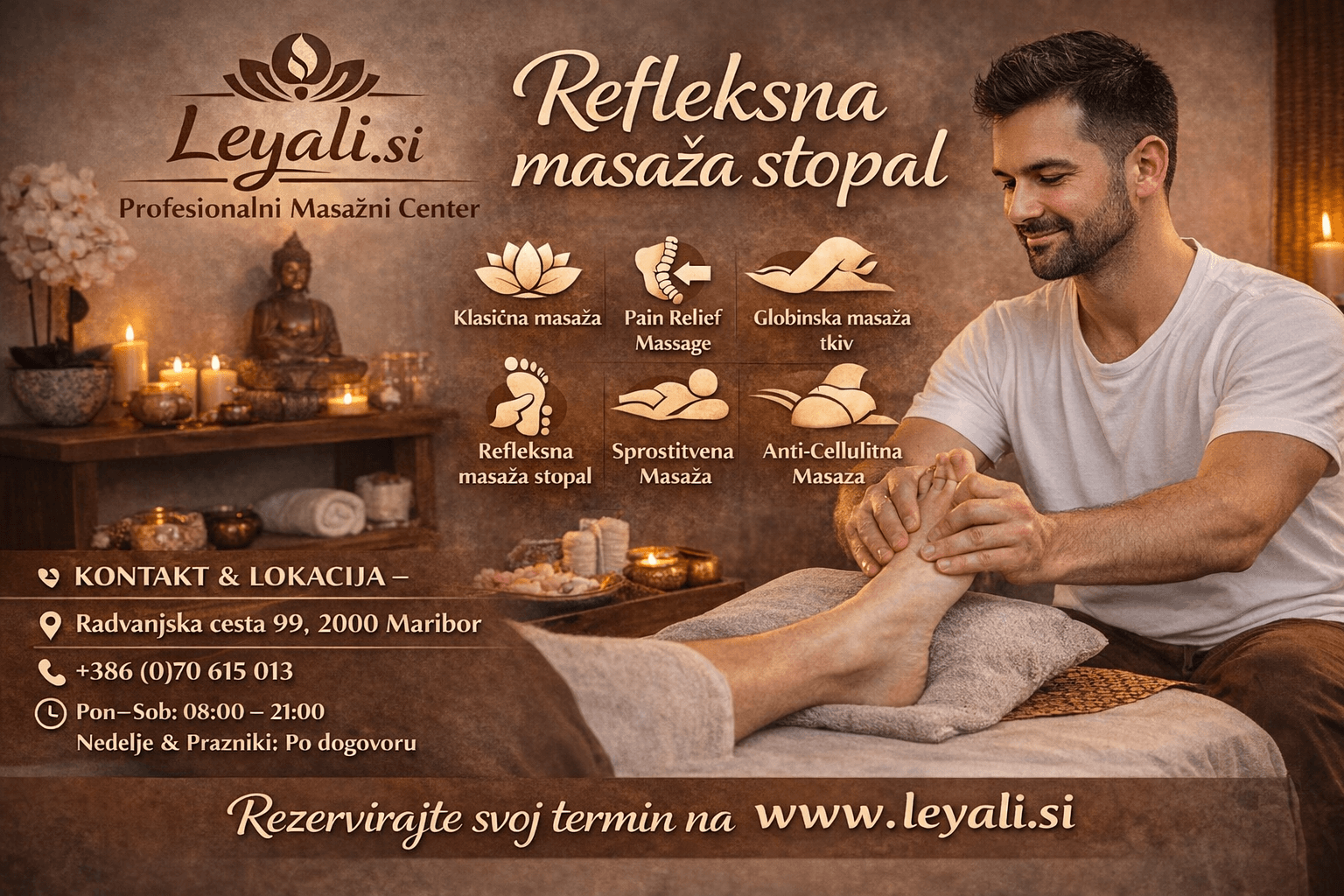
A foot reflexology therapist does far more than work on the feet. This role combines deep anatomical knowledge, refined manual skill, and an understanding of how the body functions as an interconnected system. Foot reflexology is not a trend or a wellness shortcut. It is a structured therapeutic practice that has been refined over generations and is now widely used to support balance, recovery, and overall well-being.
At LEYALI, foot reflexology is treated as a serious therapeutic discipline. Every session is guided by experience, observation, and respect for the individual body. This page is written for people who want to understand what a foot reflexology therapist really does, how reflexology works in practice, and why choosing the right therapist matters.
Location: Radvanjska Cesta 99, 2000 Maribor, Slovenia
Phone: +386 (0)70 615 013
What a Foot Reflexology Therapist Actually Does
A foot reflexology therapist works with specific pressure points on the feet that correspond to organs, glands, muscles, and systems throughout the body. These reflex points form a detailed map of the human body, and stimulating them correctly can influence physical function, circulation, nervous system activity, and overall balance.
Unlike general foot massage, reflexology is not random or intuitive pressing. It is methodical and precise.
A professional foot reflexology therapist focuses on:
- Identifying sensitive or blocked reflex zones
- Applying controlled pressure with thumbs and fingers
- Observing physical and energetic responses
- Adjusting technique based on real-time feedback
At LEYALI, reflexology sessions are never rushed. Each treatment is paced to allow the body to respond naturally.
Understanding Foot Reflexology as a Therapeutic System
Foot reflexology is based on the principle that the feet reflect the entire body. Every area of the foot corresponds to a specific body structure.
Key Reflexology Zones
- Toes: head, brain, sinuses
- Ball of the foot: chest, lungs, heart
- Arch: digestive organs
- Heel: lower back, pelvis, sciatic area
A skilled foot reflexology therapist does not just follow charts. They interpret the condition of each reflex zone through texture, sensitivity, and response.
At LEYALI, reflexology is practiced as a living system, not a mechanical routine.
The Difference Between a Foot Reflexology Therapist and a Massage Therapist
Many people confuse reflexology with foot massage. The difference is significant.
| Foot MassageFoot Reflexology Therapist | |
| Focus on relaxation | Focus on systemic balance |
| General strokes | Targeted pressure points |
| Short-term comfort | Long-term therapeutic support |
| Muscle-based | Nervous and organ-based |
A foot reflexology therapist works with intention and structure, not just comfort.
Who Benefits Most From Foot Reflexology Therapy
Foot reflexology is suitable for a wide range of people, including:
- Individuals under chronic stress
- People with sleep disturbances
- Those with digestive discomfort
- Clients experiencing hormonal imbalance
- Individuals with circulation issues
- People recovering from prolonged fatigue
At LEYALI, reflexology is adapted for each person’s age, physical condition, and sensitivity level.
How a Foot Reflexology Session Works at LEYALI
1. Initial Assessment
The session begins with a brief discussion about:
- General health condition
- Stress levels
- Physical discomfort
- Lifestyle factors
This allows the foot reflexology therapist to tailor the session.
2. Observation of the Feet
Feet are examined for:
- Temperature differences
- Texture changes
- Sensitivity points
- Tension patterns
These signs guide the therapist during treatment.
3. Reflexology Treatment
The therapist applies specific pressure techniques to reflex zones using:
- Thumb walking
- Finger pressure
- Knuckle support (when appropriate)
Pressure is firm but controlled, never aggressive.
4. Integration Phase
The session ends with gentler techniques to help the body integrate the effects.
At LEYALI, every step is intentional and calm.
Physical Effects of Working With a Foot Reflexology Therapist
Regular sessions with a professional foot reflexology therapist can support:
- Improved circulation
- Reduced muscle tension
- Better digestive function
- Balanced nervous system
- Reduced physical fatigue
Clients often describe a feeling of lightness and internal calm after sessions at LEYALI.
Mental and Emotional Effects of Reflexology
Reflexology does not stop at the physical level.
Clients commonly experience:
- Mental clarity
- Reduced anxiety
- Improved sleep quality
- Emotional release
This happens because reflexology influences the nervous system and promotes parasympathetic activity.
Why Experience Matters in Foot Reflexology
Reflexology requires sensitivity developed through practice.
An experienced foot reflexology therapist can:
- Distinguish between normal sensitivity and imbalance
- Adjust pressure instantly
- Recognize patterns across sessions
- Work safely with vulnerable clients
At LEYALI, reflexology is performed by trained therapists who understand both technique and human variability.
Common Conditions Addressed by Foot Reflexology
While reflexology is not a medical treatment, it is often used as supportive care for:
- Chronic stress
- Tension headaches
- Digestive irregularities
- Menstrual discomfort
- Circulatory sluggishness
Clients at LEYALI often use reflexology as part of a broader wellness routine.
How Often Should You See a Foot Reflexology Therapist
Frequency depends on goals and condition:
- High stress: once per week
- Maintenance: once or twice per month
- Recovery periods: short series of sessions
Consistency is more important than intensity.
Safety and Comfort in Reflexology
A professional foot reflexology therapist always works within safe limits.
At LEYALI, sessions are adapted for:
- Sensitive clients
- Older adults
- Reduced mobility
- Lower pain thresholds
Clear communication is encouraged throughout the session.
Pros & Cons of Working With a Foot Reflexology Therapist
| ProsCons | |
| Non-invasive therapy | Requires multiple sessions |
| Supports whole-body balance | Not an instant fix |
| Deeply relaxing | Effects build gradually |
| Personalized approach | Depends on therapist skill |
| Suitable for many ages | Not a replacement for medical care |
Foot Reflexology and Modern Lifestyle Challenges
Long hours of sitting, constant mental stimulation, and lack of recovery time disrupt natural balance. A foot reflexology therapist helps counter these effects by activating the body’s self-regulation mechanisms.
At LEYALI, reflexology is recommended as a proactive practice, not only a reactive one.
Why Choose LEYALI for Foot Reflexology Therapy
Clients choose LEYALI because:
- Therapists are trained and experienced
- Sessions are individualized
- The environment is calm and professional
- The focus is on long-term well-being
A foot reflexology therapist at LEYALI works with care, precision, and respect for each client.
The Role of Communication in Reflexology
Effective reflexology depends on feedback.
Clients are encouraged to:
- Share sensations
- Report discomfort
- Describe changes after sessions
This allows the foot reflexology therapist to refine future treatments.
Frequently Asked Questions About a Foot Reflexology Therapist
1. Is reflexology painful?
Pressure may be intense on sensitive points, but it should not be painful.
2. How long does a session last?
Sessions typically last between 45 and 60 minutes.
3. Do I need to prepare before a session?
No special preparation is required.
4. Can reflexology help with stress?
Yes, it is highly effective for stress regulation.
5. Is reflexology safe for older adults?
Yes, with appropriate pressure adjustments.
6. How soon will I feel results?
Some people feel changes immediately, others gradually.
7. Can reflexology replace medical treatment?
No, it is a complementary practice.
8. Should I drink water after reflexology?
Yes, hydration is recommended.
9. Can reflexology help with sleep issues?
Many clients report improved sleep.
10. Why choose a foot reflexology therapist at LEYALI?
Because LEYALI combines expertise, care, and a personalized approach.