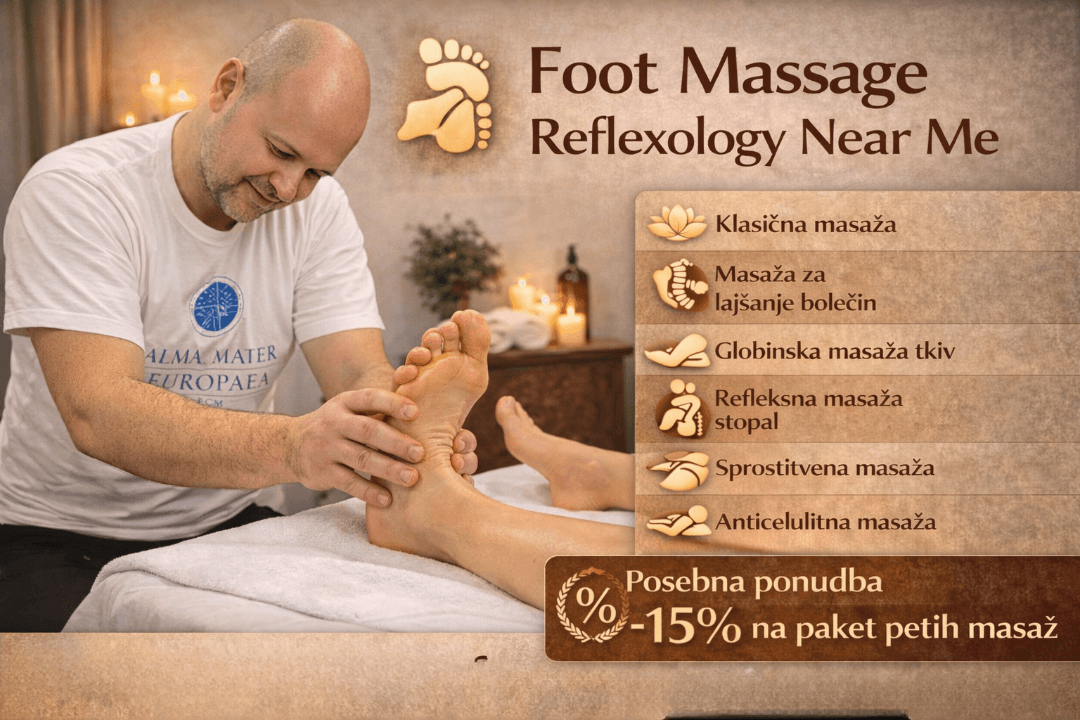
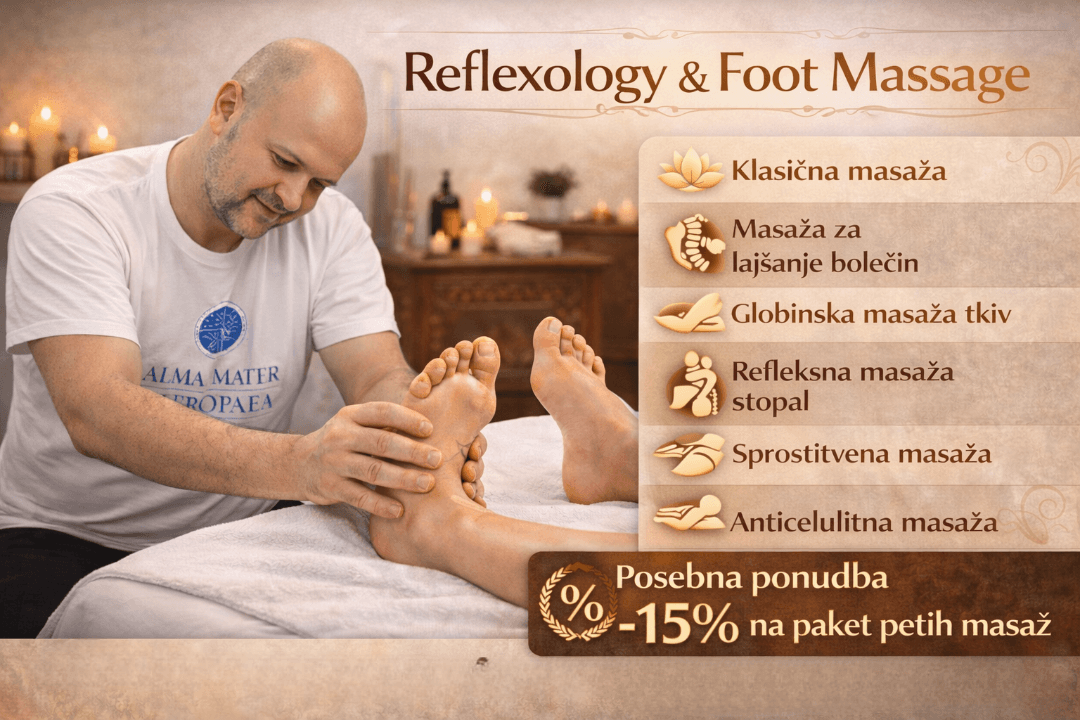
If you’re searching for reflexology and foot massage, you’re probably not looking for something complicated. You want to feel better. You want lighter feet, calmer nerves, less tension, and a body that feels like it can finally switch off for a while. Maybe you’re standing all day at work. Maybe you sit at a desk and your legs still feel heavy by evening. Maybe you walk a lot around Maribor, train at the gym, or just feel stress building up in your body in a way you can’t ignore anymore.
At LEYALI, we treat reflexology and foot massage as a focused, supportive service that blends relaxation with structured pressure techniques. It’s not about trendy wellness language. It’s about a safe session that helps you unwind, recover, and reset your body in a way you can actually feel.
Visit LEYALI in Maribor
Address: Radvanjska Cesta 99, 2000 Maribor, Slovenia
Phone: +386 (0)70 615 013
If you want to book quickly, call or message and share:
- preferred day and time
- whether you want gentle relaxation or deeper pressure
- any sensitivities (heel pain, ankle stiffness, calf cramps)
What Reflexology and Foot Massage Really Means (In Simple Terms)
People often mix up “reflexology” and “foot massage,” and honestly, the confusion is understandable. Many places use the words interchangeably. At LEYALI, we separate them clearly, then blend them in a way that makes sense for your body.
Foot massage
A good foot massage focuses on:
- softening and releasing tight tissues in the feet
- reducing soreness from standing, walking, or training
- improving comfort around the heel, arch, toes, and ankle
- helping the calves and lower legs relax
Reflexology
Reflexology uses structured pressure on specific points of the feet that are traditionally associated with different systems of the body. The purpose is not diagnosis. The purpose is supporting relaxation and helping the nervous system settle.
The best results usually come from a blend
Pure relaxation massage feels great, but it may not “unlock” deeper tension patterns. Pure reflexology can be effective but too intense if the feet are very sensitive. A blended approach often gives the best balance: comfort and targeted relief.
That’s the approach we use at LEYALI.
Why People Choose Reflexology and Foot Massage (Real Reasons, Not Marketing)
When someone books reflexology and foot massage, it’s usually because one or more of these are happening:
1) Foot fatigue that doesn’t go away
You wake up tired, you go through the day, and by evening your feet feel heavy, hot, or sore. This is common for:
- hospitality workers
- retail staff
- healthcare workers
- teachers
- warehouse and logistics staff
- anyone who stands or walks for hours
2) Stress showing up physically
Stress doesn’t stay in your head. It shows up in:
- tight calves
- clenched toes
- tense arches
- shallow breathing
- restless sleep
When the body is stuck in “go mode,” your feet often carry it.
3) Tight ankles and calves
A lot of lower-body stiffness begins in the feet. When feet are tight, ankles lose mobility, calves overwork, and walking patterns become less smooth.
4) Recovery needs
If you train, walk long distances, or stand a lot, your feet become the “ground contact point” that absorbs the load. Foot work becomes recovery.
5) You want something that feels calming immediately
Many people report that after a good foot session, their mind goes quiet. They feel grounded. Their breathing slows. That’s a sign the nervous system is shifting.
What Happens During a LEYALI Session (Step-by-Step)
A good session should feel structured and safe. Here’s how it typically flows at LEYALI.
Step 1: Quick consultation
We’ll ask:
- any pain points or sensitivities
- any medical concerns that matter for pressure
- how strong you want the pressure
- whether you want more relaxation or more targeted reflexology
This isn’t a long interview. It’s just enough to keep the session safe and effective.
Step 2: Warm-up techniques
Before deeper pressure, the feet need warming and softening:
- gentle compressions
- slow strokes over the sole and arch
- work around the ankle joint
- sometimes calf release if needed
Step 3: Structured reflexology work
Then we move into a structured pattern:
- controlled pressure points
- steady pacing
- adjustments based on how your body responds
The goal is not to “push through pain.” The goal is to create release.
Step 4: Closing and calming finish
Many sessions end with softer work to:
- calm the nervous system
- reduce sensitivity after deeper pressure
- leave you relaxed and steady, not overstimulated
When you leave, you should feel lighter, calmer, and more comfortable on your feet.
Benefits of Reflexology and Foot Massage (Realistic Expectations)
Let’s be honest: reflexology is often oversold online. At LEYALI, we keep claims realistic and focused on common outcomes clients report.
Common benefits clients feel
- reduced foot tightness and soreness
- improved comfort while walking
- looser calves and ankles
- less “heavy legs” feeling
- better relaxation and mood
- improved sleep quality for many people
- a sense of being grounded and calm
What it’s not
- It’s not a replacement for medical care
- It doesn’t “cure” diseases
- It should not be used to avoid diagnosis if you have serious pain or swelling
The value is in relief, recovery support, and stress reduction.
Who Reflexology and Foot Massage Is Great For
People who stand all day
This is one of the most common groups we see at LEYALI. If your job loads your feet daily, regular sessions can be a real support tool.
Desk workers
Sitting for long hours can still create leg heaviness and ankle stiffness. Foot work helps circulation and relaxation patterns.
Athletes and active people
Runners, walkers, gym-goers, hikers, dancers. Recovery starts at the feet.
Busy professionals under stress
Reflexology and foot massage can work as a fast reset when your nervous system is overloaded.
Anyone who struggles to relax
Some people can’t switch off mentally. Foot work often helps because it’s grounding and body-focused.
Safety Notes: When We Adjust or Recommend Caution
Reflexology and foot massage is generally safe, but we always recommend sharing if you have:
- open wounds, infections, or severe skin issues on the feet
- recent fractures, sprains, or post-surgery recovery
- severe swelling or unexplained pain
- major circulation issues or clot concerns
- diabetes complications or reduced foot sensation
- pregnancy (so we can adjust pressure and approach)
This doesn’t mean you can’t book. It means the session should be adapted.
Reflexology and Foot Massage vs Regular Massage: Why the Feet Matter So Much
People ask: “Why focus on the feet? Why not back or shoulders?”
Here’s what matters:
- feet carry your full body weight
- feet influence posture and walking patterns
- tight feet create chain tension up the calves, knees, hips, and lower back
- feet have a dense network of nerves and sensory input
- working the feet can calm the nervous system quickly
That’s why a focused foot session can feel surprisingly full-body.
How Often Should You Book Reflexology and Foot Massage?
There’s no perfect schedule, but here are common patterns:
For stress and sleep support
- weekly sessions for a short period
- then every 2–4 weeks for maintenance
For foot fatigue and muscle tightness
- every 1–2 weeks initially
- then monthly or as needed
For active training and recovery
- during intense training blocks: more frequent
- during lighter periods: spaced out
Your body will tell you. If you feel benefits that last several days, you’re on the right frequency.
How to Prepare for the Best Session
These simple habits make a noticeable difference:
1) Come a bit early
Starting relaxed changes the whole session.
2) Stay hydrated
Hydration supports tissue comfort.
3) Eat lightly
Heavy meals can make deep relaxation less comfortable.
4) Tell us about sensitive spots
Heel pain, arch tightness, ankle soreness. This helps tailor pressure.
5) Don’t force “strong pressure”
Some people think strong means effective. Not always. Effective pressure is controlled pressure.
6) Wear comfortable shoes after
If you step back into tight, hard shoes immediately, the “reset” doesn’t last as long.
Common Foot Patterns We See (Maribor Clients)
Not medical diagnosis, just typical patterns people talk about:
Heel and arch tension
Often from:
- standing long hours
- hard surfaces
- limited calf mobility
- unsupportive footwear
Ankle stiffness
Often from:
- sitting too much
- repetitive walking patterns
- low mobility work
General “heavy feet”
Often from:
- fatigue
- stress
- long days
- tight calves and poor circulation habits
Reflexology and foot massage supports these patterns by relaxing tissues and calming the system.
Why LEYALI in Maribor
If you’re looking for reflexology and foot massage in Maribor, you want a place that feels professional and calm. LEYALI focuses on:
- structured sessions, not rushed work
- communication about pressure and comfort
- practical relief and recovery support
- consistent, safe technique
LEYALI Contact
Radvanjska Cesta 99, 2000 Maribor, Slovenia
+386 (0)70 615 013
Pros & Cons Table: Reflexology and Foot Massage
| ProsCons | |
| Helps reduce foot fatigue and tightness | Not a replacement for medical treatment for serious conditions |
| Supports relaxation and stress reduction | Some people feel temporary tenderness after deep pressure |
| Can improve sleep quality for many clients | Results depend on lifestyle, shoes, and consistency |
| Loosens calves and ankles through foot release | Requires communication to match the right pressure level |
| Works well for people who stand or walk a lot | Not suitable over open wounds or infections without postponing |
| Convenient for regular wellness maintenance | May take a few sessions for longer-lasting results |
Book Reflexology and Foot Massage at LEYALI
Address: Radvanjska Cesta 99, 2000 Maribor, Slovenia
Phone: +386 (0)70 615 013
If you’re ready to feel lighter, calmer, and more comfortable in your feet, LEYALI is here for you.
FAQs: Reflexology and Foot Massage
- What is reflexology and foot massage?
- It’s a service that blends relaxing foot massage with structured reflexology pressure techniques to reduce tension and support deep relaxation.
- Is reflexology and foot massage painful?
- It should not be sharply painful. Some points may feel tender, but pressure should be controlled and adjusted to your comfort.
- How long does a typical session take?
- Session length varies. Most people choose enough time to relax without rushing the feet and lower legs.
- Can reflexology and foot massage help with stress?
- Many clients feel calmer and more grounded after a session because foot work can support the nervous system shifting into a relaxed state.
- Is it good for people who stand all day?
- Yes. Standing all day loads the feet and calves. This service often brings fast relief and lighter legs.
- Can I book if I have heel pain or tight arches?
- Yes, but tell the therapist so pressure and techniques can be adjusted safely.
- Can pregnant clients book reflexology and foot massage?
- Many do, but you should inform the therapist so the session can be adapted with safer pressure and positioning.
- How often should I book to feel results?
- Some people book weekly at first, then move to every 2–4 weeks. Frequency depends on stress levels and foot load.
- What should I do after the session?
- Hydrate, walk gently, and wear comfortable shoes. Avoid jumping into intense activity if you feel deeply relaxed.
- How do I book with LEYALI in Maribor?
- Call +386 (0)70 615 013 or visit Radvanjska Cesta 99, 2000 Maribor, Slovenia to schedule your session.